Updates and
Things You Should Know
Everything you need to know about ASA HOTEL. All the latest news, software updates, customer success stories, and frequently asked questions at a glance. So you're always well-informed!

ASA Gerry: The AI Assistant Built Into ASA HOTEL
Find reservations, check in guests, mark rooms as clean: ASA Gerry handles it all via chat. The service will launch for customers sometime in 2027.
ASA Gerry: The AI Assistant Built Into ASA HOTEL
Find reservations, check in guests, mark rooms as clean: ASA Gerry handles it all via chat. The service will launch for customers sometime in 2027.

Receipts for down payments and multipurpose Vouchers (Italy)
To ensure that revenue and payments match exactly for any given period, amounts not subject to VAT (non soggetto IVA) in Italy should be reported to the AdE going forward.
Receipts for down payments and multipurpose Vouchers (Italy)
To ensure that revenue and payments match exactly for any given period, amounts not subject to VAT (non soggetto IVA) in Italy should be reported to the AdE going forward.

ASA Partner Day 2026
At Partner Day 2026, ASA HOTEL is strengthening its collaboration with sales and interface partners.
ASA Partner Day 2026
At Partner Day 2026, ASA HOTEL is strengthening its collaboration with sales and interface partners.
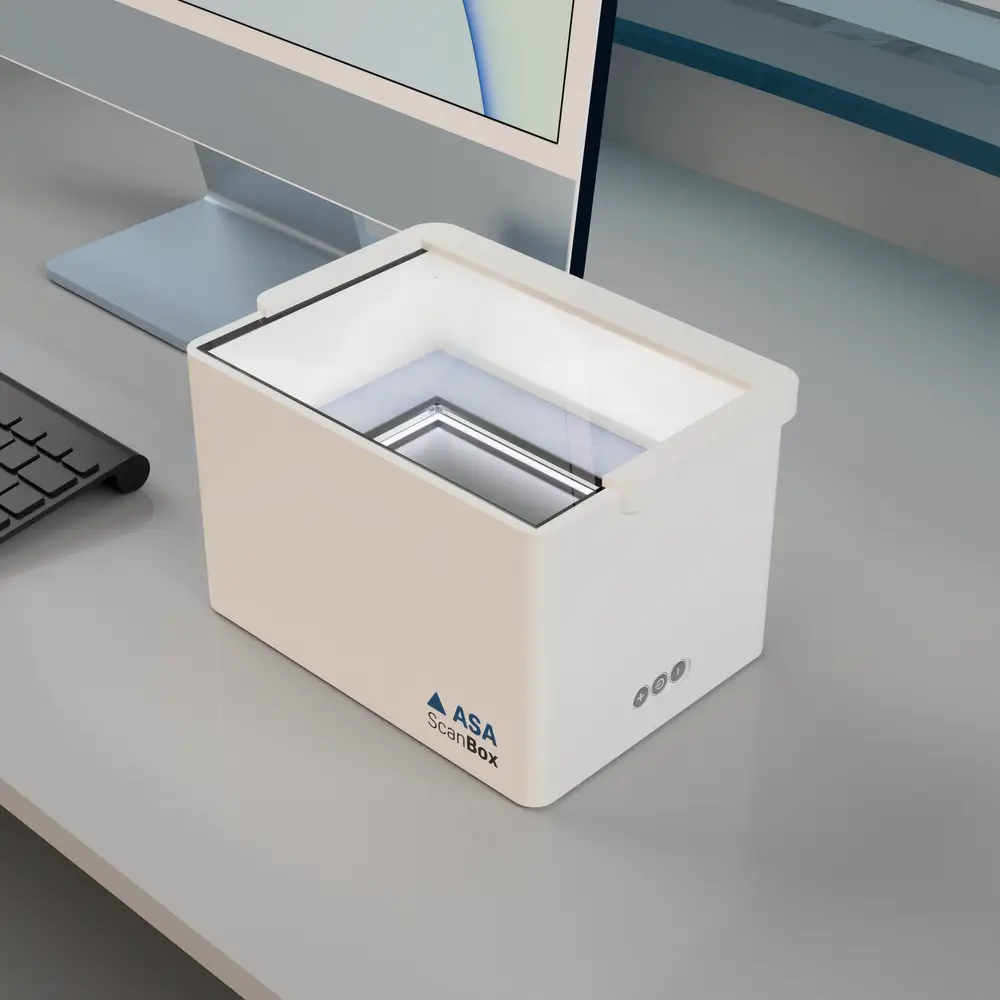
Instead of typing, just scan—with the ASA ScanBox
No more typing—just scan.
Instead of typing, just scan—with the ASA ScanBox
No more typing—just scan.

ASA HOTEL: DEHOGA Bavaria's Expert Partner
ASA HOTEL continues its successful partnership with DEHOGA Bavaria.
ASA HOTEL: DEHOGA Bavaria's Expert Partner
ASA HOTEL continues its successful partnership with DEHOGA Bavaria.
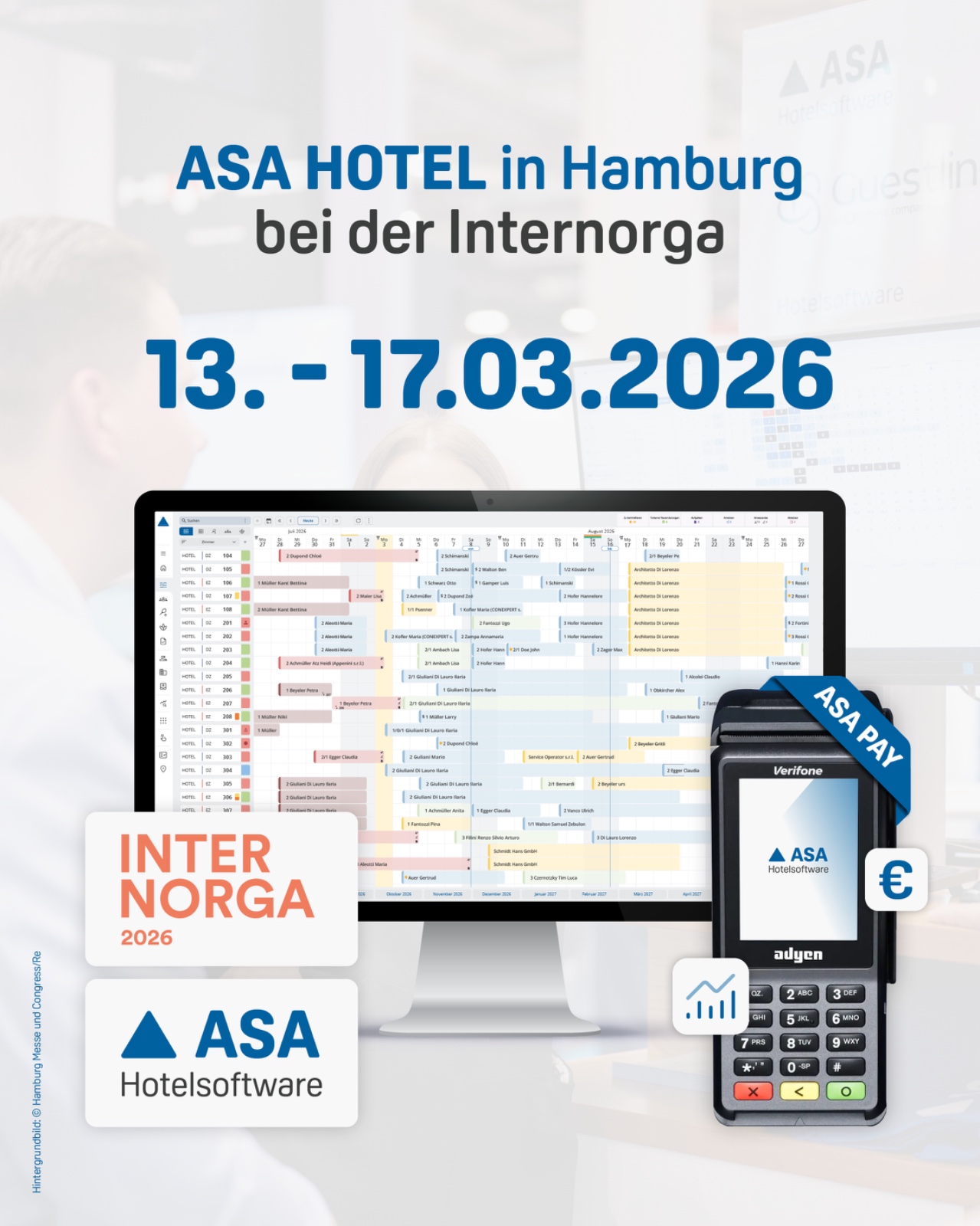
Internorga in Hamburg 2026
Experience ASA HOTEL in person from March 13 to 17, 2026, at Internorga in Hamburg
Internorga in Hamburg 2026
Experience ASA HOTEL in person from March 13 to 17, 2026, at Internorga in Hamburg
.jpeg)
ITB in Berlin 2026
Experience ASA HOTEL in person from March 3 to 5, 2026, at ITB in Berlin
ITB in Berlin 2026
Experience ASA HOTEL in person from March 3 to 5, 2026, at ITB in Berlin
.jpg)
Intergastra in Stuttgart 2026
Come visit our ASA experts at Intergastra in Stuttgart—February 7–11, 2026.
Intergastra in Stuttgart 2026
Come visit our ASA experts at Intergastra in Stuttgart—February 7–11, 2026.

ASA HOTEL is an official Trusted Supplier of HotellerieSuisse
ASA HOTEL is an official Trusted Supplier of HotellerieSuisse; Welcome Offer for HotellerieSuisse Members
ASA HOTEL is an official Trusted Supplier of HotellerieSuisse
ASA HOTEL is an official Trusted Supplier of HotellerieSuisse; Welcome Offer for HotellerieSuisse Members

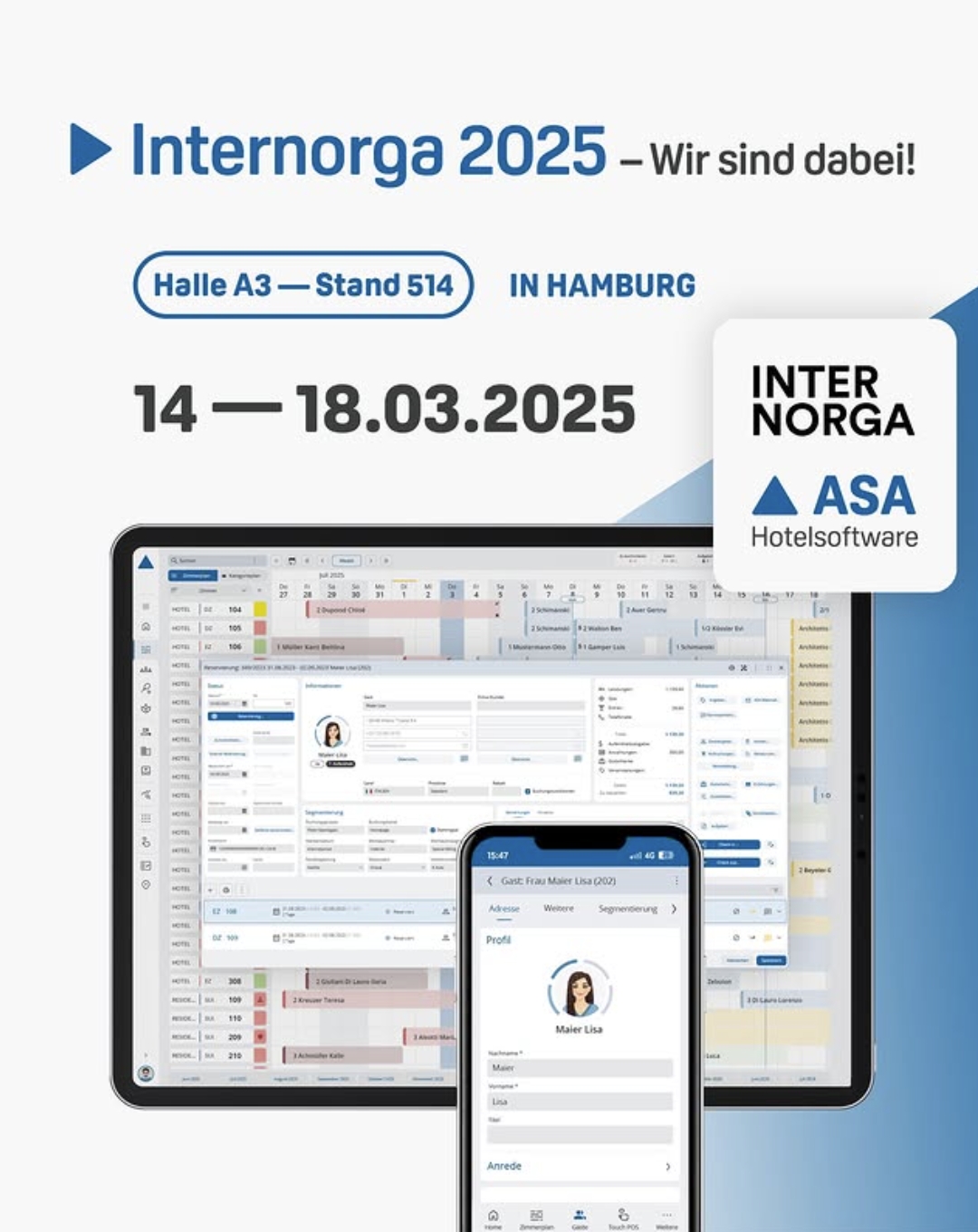
Internorga in Hamburg 2025
ASA HOTEL will be at INTERNORGA 2025 in Hamburg again this year, from March 14 to March 18.
Internorga in Hamburg 2025
ASA HOTEL will be at INTERNORGA 2025 in Hamburg again this year, from March 14 to March 18.

E-Invoicing in Germany
ASA Is Ready for German E-Invoicing
E-Invoicing in Germany
ASA Is Ready for German E-Invoicing

Software Update 24.00 - 24.11
Update Description through Version 24.11
Software Update 24.00 - 24.11
Update Description through Version 24.11

Alles für den Gast 2024
ASA HOTEL at the "Alles für den Gast 2024" trade show at the Salzburg Exhibition Center.
Alles für den Gast 2024
ASA HOTEL at the "Alles für den Gast 2024" trade show at the Salzburg Exhibition Center.
South Tyrol Guest Pass
Interior Design and Exhibition
South Tyrol Guest Pass
Interior Design and Exhibition

Making the Extraordinary Possible
The Amus Chalets Dolomites in Rasen Antholz focus on enjoyment, tranquility, and ASA HOTEL.
Making the Extraordinary Possible
The Amus Chalets Dolomites in Rasen Antholz focus on enjoyment, tranquility, and ASA HOTEL.

Big News: Six New Partner Companies in Germany and Austria
Not one, not two, but six renowned hotel software companies from Germany and Austria have decided to partner with ASA. This marks the biggest deal in our company’s 35-year history.
Big News: Six New Partner Companies in Germany and Austria
Not one, not two, but six renowned hotel software companies from Germany and Austria have decided to partner with ASA. This marks the biggest deal in our company’s 35-year history.
.png)
wellness-hotel.info Award
25 hotels honored with the wellness-hotel.info Award 2024 use ASA HOTEL
wellness-hotel.info Award
25 hotels honored with the wellness-hotel.info Award 2024 use ASA HOTEL
.jpg)
Hotel Quelle and ASA HOTEL
A long-standing success: the multi-award-winning 5-star Quelle Nature Spa Resort and ASA HOTEL
Hotel Quelle and ASA HOTEL
A long-standing success: the multi-award-winning 5-star Quelle Nature Spa Resort and ASA HOTEL

The New ASA HOTEL
In 2024, we aim to set new standards and reach an important milestone in our history. We are pleased to introduce the new ASA WebUpgrade.
The New ASA HOTEL
In 2024, we aim to set new standards and reach an important milestone in our history. We are pleased to introduce the new ASA WebUpgrade.

Success Story: Franks
The Franks Hotel in the Allgäu Region's Successful Transition to ASA HOTEL.
Success Story: Franks
The Franks Hotel in the Allgäu Region's Successful Transition to ASA HOTEL.
%20Hannes%20Niederkofler_WEB-1981.jpg)
%20Hannes%20Niederkofler_WEB-1981.jpg)
LTS Daily Report
Starting November 1, 2023, South Tyrolean lodging establishments are required to submit the ASTAT report daily.
LTS Daily Report
Starting November 1, 2023, South Tyrolean lodging establishments are required to submit the ASTAT report daily.
Software Update 21.00 - 23.11
Update Description (Version 23.08)
Software Update 21.00 - 23.11
Update Description (Version 23.08)

Parcel Shipping
Forgetful hotel guests? Say goodbye to the front desk and cash!
Parcel Shipping
Forgetful hotel guests? Say goodbye to the front desk and cash!

Sales Data vs. Invoice Data
A Brief Excursion into the World of Data
Sales Data vs. Invoice Data
A Brief Excursion into the World of Data

ASA Payments
Process card payments quickly, securely, and automatically
ASA Payments
Process card payments quickly, securely, and automatically

Electric Vehicle Charging Stations
Connect EV charging stations and heating systems to ASA HOTEL
Electric Vehicle Charging Stations
Connect EV charging stations and heating systems to ASA HOTEL

Bed Capacity Cap in South Tyrol
The South Tyrolean Provincial Government approved the implementing regulation on the bed capacity cap on September 13, 2022...
Bed Capacity Cap in South Tyrol
The South Tyrolean Provincial Government approved the implementing regulation on the bed capacity cap on September 13, 2022...

Performance Report
Pickup Analyses and Performance Report
Performance Report
Pickup Analyses and Performance Report

Submission of Guest Registration Information
Alloggiati Web
Submission of Guest Registration Information
Alloggiati Web
.jpg)
Receptionist
ASA HOTEL: Career Change to Receptionist
Receptionist
ASA HOTEL: Career Change to Receptionist


Wachstum stellt andere Anforderungen an eine Hotelsoftware als der laufende Betrieb. Entscheidend ist dabei die Skalierbarkeit bei gleichbleibender Datenkonsistenz. Sobald ein Hotelbetrieb auf mehrere Häuser anwächst, verändern sich die Systemanforderung grundlegend. Prozesse, die in einem einzelnen Betrieb funktionieren, stoßen bei mehreren Standorten schnell an ihre Grenzen.
Typische Herausforderungen wachsender Betriebe
- Neue Standorte mit unterschiedlichen Teams
- Zentrale Marketing- und Preisstrategie
- Vergleichbarkeit von Kennzahlen
- Unterschiedliche regionale Märkte
Was früher direkt abgestimmt wurde, muss nun systemisch und einheitlich geregelt werden.
Operative Anforderungen
Ein PMS muss u.a. folgendes ermöglichen:
- Getrennte Standortführung
- Einheitliche Raten- und Segmentdefinition
- Konsolidierte Reportingstrukturen
Wachstum erzeugt Komplexität. Das PMS muss für klare Strukturen sorgen, die Abläufe transparent darstellen.
Strategische Anforderungen
Das Management benötigt:
- Standortübergreifende Kennzahlen
- Die Vergleichbarkeit von Performancedaten
- Zentrale Steuerungsmöglichkeiten
- Eine klare Reportinghierarchie
Ohne konsistente Datenbasis sind Vergleiche nur eingeschränkt belastbar.
Entscheidungsfragen
- Lassen sich neue Standorte problemlos integrieren?
- Sind Kennzahlen standortübergreifend vergleichbar?
- Gibt es gemeinsame Daten, z.B. Gästedaten?
- Sind Rollen und Verantwortlichkeiten systemisch abbildbar?
Die Rolle von ASA HOTEL
ASA HOTEL erlaubt es, mehrere Betriebe strukturiert zu führen, ohne die lokale Flexibilität zu verlieren. Das Reporting kann konsolidiert erfolgen, die operative Steuerung bleibt jedoch standortspezifisch möglich. Verteilte Hotelstandorte verschmelzen mit ASA HOTEL zu einer gemeinsamen strategischen Einheit. Je nach strategischer Ausrichtung und Verwaltung der Betriebe gibt es in ASA HOTEL diverse Möglichkeiten für das Multi-Property-Management: "Getrennte Betriebe und gemeinsame Gästedatenbank" oder "Mehrere Betriebe gemeinsamer Zimmerplan" (weiterlesen...)
Q & A
Ab wann sollte man über eine skalierbare Hotelsoftware nachdenken?
Idealerweise sollte man sich bereits dann Gedanken machen, wenn Wachstum geplant ist und nicht erst nach der Expansion. Wer erst nach der Eröffnung eines weiteren Standorts reagiert, muss Prozesse oft unter Zeitdruck anpassen. Ein skalierbares PMS sollte von Beginn an in der Lage sein, zusätzliche Häuser strukturiert zu integrieren, ohne Reporting-Logik oder Datenkonsistenz zu gefährden.
Ist ein Standortvergleich ohne einheitliche Systemstruktur sinnvoll?
Nur sehr eingeschränkt. Wenn Kennzahlen, Segmente oder Preisdefinitionen je Standort unterschiedlich angelegt sind, entstehen verzerrte Vergleiche. Ein valider Performance-Vergleich setzt identische Definitionsgrundlagen voraus – sonst werden strategische Entscheidungen auf Basis unvollständiger oder nicht vergleichbarer Daten getroffen.
Wie verhindert man einen Kontrollverlust bei mehreren Häusern?
Durch klar definierte Rollenmodelle und eine zentrale Datenlogik im PMS. Die Operative Verantwortung kann dezentral bleiben, während das Reporting, die Segmentdefinition und Kennzahlen zentral strukturiert sind. So entsteht Transparenz ohne operative Bevormundung – und das Management behält jederzeit einen konsolidierten Überblick.
Weiterführende Links:
Nicht die Größe eines Hotels entscheidet über die Anforderungen an eine Hotelsoftware, sondern das Geschäftsmodell. Ferienhotel und Stadthotel unterscheiden sich weniger in der Zimmeranzahl als vielmehr in Aufenthaltsstruktur, Buchungsverhalten und operativen Abläufen. Eine Hotelsoftware muss diese Unterschiede abbilden können, ohne unnötige Komplexität zu erzeugen.
Stadthotel: Hoher Durchlauf, kurze Aufenthalte
Typische Merkmale der Stadthotellerie sind:
- Kurzfristige Buchungen
- Hohe Wechselrate
- Starker OTA-Anteil
- Klare Check-in-/Check-out-Frequenz
Hier steht Geschwindigkeit im Vordergrund. Prozesse müssen schlank, eindeutig und hoch synchronisiert sein.
Kritische Erfolgsfaktoren
- Echtzeit-Verfügbarkeiten
- Schnelle Reservierungserfassung
- Klare Zahlungszuordnung
- Reibungsloser Check-out
Eine Hotelsoftware muss in Stadthotels Stabilität und Tempo verbinden.
Ferienhotel: Längere Aufenthalte, komplexere Leistungen
Typische Merkmale:
- Aufenthalte über mehrere Tage
- Pauschalen und Zusatzleistungen
- Saisonale Auslastungsschwankungen
- Stammgäste
Hier ist die Aufenthaltslogik komplexer. Leistungen wie Halbpension, Spa-Angebote oder Zusatzpakete müssen strukturiert dokumentiert und abgerechnet werden.
Kritische Erfolgsfaktoren
- Flexible Raten- und Pauschalstruktur
- Klare Leistungszuordnung
- Übersichtliche Gästekartei
- Saisonübergreifendes Reporting
Entscheidungs-Checkliste
- Wie lang ist die durchschnittliche Aufenthaltsdauer?
- Wie hoch ist der Anteil an Zusatzleistungen?
- Gibt es starke saisonale Schwankungen?
- Wie hoch ist der Anteil externer Buchungskanäle?
Die Antworten geben Hinweise darauf, welche Prozesslogik im PMS im Vordergrund stehen muss.
Die Rolle von ASA HOTEL
ASA HOTEL ist so aufgebaut, dass sowohl hohe Durchlaufprozesse als auch komplexe Aufenthaltsmodelle strukturiert abgebildet werden können. Entscheidend ist nicht der Hoteltyp, sondern die saubere Konfiguration der Prozesse.
Q & A
Kann ein PMS beide Modelle gleichermaßen abbilden?
Ja, vorausgesetzt, das PMS ist flexibel konfigurierbar und erzwingt keine starren Prozessvorgaben. Ein Stadthotel mit hoher Wechselrate benötigt andere Abläufe als ein Ferienhotel mit längeren Aufenthalten und Pauschalen. Entscheidend ist, dass das PMS unterschiedliche Ratenstrukturen, Segmentlogiken und Leistungsmodelle abbilden kann, ohne dass Workarounds notwendig werden.
Was ist der häufigste Fehler bei der Systemwahl?
Den Fokus auf einzelne Funktionen oder Feature-Listen zu legen, statt vom eigenen Geschäftsmodell aus zu denken. Ein System kann technisch viel leisten, wenn es jedoch nicht zur Aufenthaltsstruktur, Zielgruppe oder Preislogik passt, entstehen im Alltag Reibungsverluste. Entscheidend ist, dass das System zur operativen Realität passt, nicht die Anzahl der Funktionen.
Ist Dynamic Pricing für beide Modelle gleich relevant?
Nein. Stadthotels reagieren häufig stärker auf kurzfristige Nachfrageveränderungen und benötigen eine flexible Preissteuerung im Tagesverlauf. Ferienhotels hingegen arbeiten oft mit längeren Buchungsvorläufen und saisonalen Strukturen. Hier steht die strategische Saisonplanung im Vordergrund. In beiden Fällen ist jedoch eine saubere Datenbasis im PMS Voraussetzung für fundierte Preisentscheidungen.
Weiterführende Links:
Arbeitsweise mit dynamischen Preisen (Revenue Management)
PMS für familiengeführte Hotels: Struktur ohne Bürokratie
Familiengeführte Hotels brauchen ein System, das Übersicht schafft und Verantwortung klar abbildet. In vielen familiengeführten Betrieben übernehmen Inhaber mehrere Rollen gleichzeitig: operative Leitung, Preisgestaltung, Controlling. Ein PMS muss hier vor allem eines leisten – Transparenz ohne zusätzlichen Verwaltungsaufwand.
Typische Anforderungen
- Klare Belegungsübersicht
- Schnelle Reservierungserfassung
- Verständliches Reporting
- Übersichtliche Gästekartei
Komplexe Unterstrukturen oder überladene Dashboards führen hier selten zu Mehrwert.
Entscheidungsfragen
- Ist das System intuitiv bedienbar?
- Können Kennzahlen ohne externe Beratung interpretiert werden?
- Sind Rollen flexibel definierbar?
Die Rolle von ASA HOTEL
ASA HOTEL ermöglicht eine klare Struktur, ohne starre Hierarchien zu erzwingen. Prozesse bleiben nachvollziehbar, auch wenn mehrere Aufgaben von wenigen Personen übernommen werden.
Q & A
Braucht ein familiengeführter Betrieb umfangreiche Schnittstellen?
Nicht zwingend. Schnittstellen sind dann sinnvoll, wenn sie konkrete Abläufe vereinfachen – etwa die Synchronisation mit einem Channel Manager oder die automatische Zahlungszuordnung. Entscheidend ist, dass keine zusätzliche Komplexität entsteht. Jede Integration sollte einen klaren operativen Nutzen haben.
Ist Automatisierung in einem familiengeführten Hotel sinnvoll?
Ja, insbesondere bei wiederkehrenden Routinen wie Abrechnung, Zahlungsverbuchung oder standardisierter Gästekommunikation. Automatisierung ersetzt nicht die persönliche Betreuung, sondern schafft Freiräume dafür.
Wie wichtig ist Reporting in kleineren Betrieben?
Sehr wichtig. Gerade in kleineren Häusern treffen Eigentümer strategische Entscheidungen oft selbst. Verständliche, klar strukturierte Kennzahlen sind die Grundlage für Preisgestaltung, Saisonplanung und Investitionsentscheidungen.
PMS für Aparthotels & Long-Stay-Konzepte
Long-Stay-Betriebe benötigen eine andere Prozesslogik als klassische Übernachtungshotels. Aparthotels arbeiten mit längeren Aufenthalten, reduzierter Servicefrequenz und teils anderen Abrechnungsmodellen. Ein PMS muss diese Struktur sauber abbilden können.
Besonderheiten
- Flexible Aufenthaltsdauer
- Angepasste Housekeeping-Zyklen
- Monatsabrechnungen oder Zwischenabrechnungen
- Wiederkehrende Gästeprofile
Kritische Systemanforderungen
- Flexible Ratenlogik
- Leistungsverwaltung über längere Zeiträume
- Klare Abgrenzung zwischen Unterkunft und Zusatzleistungen
Entscheidungsfragen
Können längere Aufenthalte ohne manuelle Korrekturen verwaltet werden?
Sind wiederkehrende Gäste sauber dokumentiert?
Ist die Abrechnung transparent strukturiert?
Q & A
Ist ein klassisches PMS für Long-Stay-Betriebe ausreichend?
Nur wenn es flexibel konfigurierbar ist. Systeme, die primär auf Kurzaufenthalte ausgerichtet sind, stoßen bei Monatsabrechnungen oder variablen Servicezyklen schnell an Grenzen.
Wie wichtig ist die Abrechnungssystematik bei längeren Aufenthalten?
Sehr wichtig. Zwischenabrechnungen, individuelle Vertragsmodelle oder wiederkehrende Leistungen müssen transparent dokumentiert werden. Eine unklare Abrechnungslogik führt hier schnell zu Rückfragen und Korrekturen.
Welche Rolle spielt die Gästedatenhistorie bei Long-Stay?
Die Gästedatenhistorie ist zentral. Wiederkehrende Gäste und längere Vertragsbeziehungen erfordern eine konsistente, vollständige Dokumentation. Das PMS sollte diese Historie strukturiert abbilden können.
PMS für Häuser mit starkem Veranstaltungsfokus
Je höher der Anteil an Gruppen und Events, desto wichtiger ist Struktur in der Buchungslogik. Convention- und Seminarhotels benötigen klare Trennung bzw. Verbindung zwischen Individual- und Gruppenbuchungen.
Typische Anforderungen
Gruppenreservierungen
Raumverwaltung
Unterschiedliche Abrechnungseinheiten
Komplexe Leistungszuordnung
Entscheidungsfragen
Lassen sich Gruppen sauber von Individualgästen trennen?
Ist die Abrechnung nachvollziehbar strukturiert?
Können Reports Veranstaltungsumsätze separat darstellen?
Q & A
Braucht es zwingend eine eigene Eventsoftware?
Nicht unbedingt. Entscheidend ist, ob das PMS die Gruppen- und Veranstaltungslogik strukturiert abbilden kann. Wenn Buchung, Raumverwaltung und Abrechnung systemisch verbunden sind, ist eine separate Lösung nicht immer erforderlich.
Wie wichtig ist die Trennung von Individual- und Gruppenumsätzen?
Das ist sowohl operativ als auch strategisch sehr wichtig. Nur wenn Umsätze sauber getrennt ausgewertet werden können, lassen sich Firmen- oder Veranstaltungssegmente realistisch bewerten.
Wo entstehen in Seminarhotels typischerweise Prozessprobleme?
Das passiert häufig bei der Leistungszuordnung und Abrechnung. Wenn Veranstaltungsleistungen außerhalb des PMS dokumentiert werden, entstehen manuelle Zwischenschritte und spätere Korrekturen.
PMS für stark digitalisierte Hotels
Wer digitale Prozesse maximiert, braucht dafür ein stabiles Systemfundament. Self-Check-in, digitale Schlüssel, automatisierte Kommunikation – all das setzt voraus, dass das PMS konsistente Daten liefert.
Anforderungen
Echtzeit-Daten
Stabile Schnittstellen
Klare Statuslogik
Automatisierte Prozessauslösung
Entscheidungsfragen
Ist das PMS als zentrale Datenquelle definiert?
Sind Statusänderungen systemisch verknüpft?
Lassen sich Automatisierungen sauber steuern?
Q & A
Kann ein hohes Maß an Digitalisierung ohne stabiles PMS funktionieren?
Kurzfristig ja, langfristig nicht. Self-Check-in, digitale Schlüssel oder automatisierte Kommunikation setzen konsistente Echtzeitdaten voraus. Ohne stabile Datenbasis entstehen Fehlerquellen.
Wie erkennt man, ob das PMS digitalisierungsfähig ist?
Wenn es als zentrale Datenquelle definiert ist und Schnittstellen strukturiert integriert werden können. Statusänderungen und Buchungsdaten müssen automatisch weitergegeben werden können.
Ist eine maximale Automatisierung immer sinnvoll?
Nein. Automatisierung sollte dort eingesetzt werden, wo Routine entsteht. Persönliche Betreuung bleibt insbesondere bei individuellen Anliegen entscheidend.
PMS für Hotels in saisonalen Destinationen
Saisonale Schwankungen erfordern eine flexible Steuerung sowie eine klare Datenhistorie. In Ferienregionen herrschen starke Nachfrageschwankungen. Ein PMS muss daher die Vergleichbarkeit über Saisonen hinweg ermöglichen.
Anforderungen
Historische Vergleichsdaten
Flexible Preisstruktur
Klare Segmentdefinition
Entscheidungsfragen
Sind Saisonen im System sauber definiert?
Lassen sich Vorjahresvergleiche einfach erstellen?
Sind Stammgäste eindeutig segmentiert?
Q & A
Ist Dynamic Pricing in saisonalen Regionen zwingend notwendig?
Das ist nicht zwingend nötig. Wichtiger ist eine saubere Datenbasis, die saisonale Vergleiche ermöglicht. Erst auf dieser Grundlage kann entschieden werden, ob dynamische Preissteuerung sinnvoll ist.
Warum ist die historische Vergleichbarkeit so entscheidend?
Saisonale Märkte leben vom Vergleich mit Vorjahren. Ohne konsistente Datenhistorie sind Preis- und Kapazitätsentscheidungen schwer planbar.
Welche Kennzahlen sind in Ferienregionen besonders relevant?
Neben der Auslastung und dem ADR sind das vor allem die Segmententwicklung, der Buchungsvorlauf und die Zusatzleistungsumsätze. Diese Kennzahlen helfen, das Nachfrageverhalten besser zu verstehen.
Je stärker ein Hotel über Individualität und Marke definiert ist, desto wichtiger ist eine stabile Prozessstruktur im Hintergrund. Boutiquehotels setzen auf Persönlichkeit, Design, Individualität und Wiedererkennung. Gerade deshalb darf im operativen Ablauf keine Unsicherheit entstehen.
Charakteristika markenorientierter Betriebe
- Klare Positionierung
- Hoher Anspruch an Gästekommunikation
- Individuelle Zusatzleistungen
- Starke Stammgastbindung
Hier ist Konsistenz entscheidend, nicht eine Standardisierung der Leistungen.
Operative Anforderungen
Ein PMS sollte folgendes ermöglichen:
- Saubere Dokumentation individueller Gästewünsche
- Flexible Leistungsverwaltung
- Klare Notizstruktur
- Stabile Abrechnungslogik trotz Individualisierung
Individualität darf nicht zu Prozesschaos führen.
Strategische Anforderungen
- Segmentierung von Stammgästen
- Auswertung wiederkehrender Aufenthalte
- Analyse von Zusatzleistungen
- Konsistente Gästedatenhistorie
Markenbindung basiert auf Datenkontinuität.
Entscheidungsfragen
- Können individuelle Gästewünsche strukturiert dokumentiert werden?
- Ist die Gästekartei langfristig konsistent?
- Sind Zusatzleistungen flexibel konfigurierbar?
- Bleibt das Reporting trotz Individualität klar?
Die Rolle von ASA HOTEL
ASA HOTEL verbindet flexible Prozessgestaltung mit klarer Systemlogik. Individualisierung findet im Rahmen einer stabilen Struktur statt, nicht außerhalb des Systems.
Q & A
Passt ein strukturiertes PMS zu einem individuellen Hotelkonzept?
Ja, gerade Individualität benötigt eine stabile Datengrundlage. Je stärker ein Hotel über Persönlichkeit, Design und maßgeschneiderte Gästebetreuung positioniert ist, desto wichtiger ist Klarheit im Hintergrund. Ein strukturiertes PMS sorgt dafür, dass individuelle Wünsche, Präferenzen und Leistungen konsistent dokumentiert werden, ohne dass operative Abläufe improvisiert werden müssen.
Besteht die Gefahr, dass Standardisierung die Marke verwässert?
Nein. Standardisierte Prozesse im Hintergrund stärken die Markenerfahrung im Vordergrund. Gäste nehmen nicht wahr, wie strukturiert Abrechnung oder Datenpflege organisiert sind – sie erleben einen reibungslosen Aufenthalt. Klare interne Abläufe schaffen Sicherheit für das Team und ermöglichen genau jene Individualität, die das Markenerlebnis ausmacht.
Wie wichtig ist die Datenhistorie für Boutiquehotels?
Die Datenhistorie ist sehr wichtig, insbesondere für personalisierte Gästekommunikation und langfristige Stammgastbindung. Wiederkehrende Gäste erwarten, dass Präferenzen, frühere Aufenthalte oder besondere Wünsche bekannt sind. Eine konsistente, über Jahre gepflegte Datenhistorie im PMS ist daher kein technisches Detail, sondern Teil der Markenstrategie.
Weiterführende Links:
Je spezialisierter das Hotelkonzept, desto klarer müssen Prozesse strukturiert sein.
Nicht jede Hotelsoftware passt automatisch zu jedem Betriebsmodell. Boutique-, Wellness- und Conventionhotels stellen unterschiedliche Anforderungen, und zwar nicht an die Funktionen, sondern an die Prozesslogik.
Boutiquehotel: Individualität mit Struktur
Charakteristik:
- Persönlicher Gästekontakt
- Wenige Zimmer
- Hohe Individualisierung
Hier ist Flexibilität entscheidend. Gästewünsche, Sonderleistungen und persönliche Notizen müssen sauber dokumentiert sein, ohne das System zu überladen.
Anforderungen an das PMS
- Übersichtliche Gästekartei
- Flexible Leistungsverwaltung
- Klare Notiz- und Kommunikationsstruktur
Wellnesshotel: Termin- und Leistungslogik
Charakteristik:
- Spa- und Zusatzangebote
- Terminabhängige Leistungen
- Hoher Serviceanspruch
Hier spielt die saubere Zuordnung von Leistungen eine zentrale Rolle. Zusatzangebote dürfen weder untergehen noch doppelt verrechnet werden.
Anforderungen an das PMS
- Strukturierte Leistungsdefinition
- Saubere Abrechnungslogik
- Transparente Zusatzleistungsübersicht
Conventionhotel: Gruppen- und Veranstaltungsstruktur
Charakteristik:
- Gruppenbuchungen
- Veranstaltungsräume
- Unterschiedliche Abrechnungseinheiten
Hier steht Organisation im Vordergrund. Einzel- und Gruppenbuchungen müssen klar getrennt, aber systemisch verbunden sein.
Anforderungen an das PMS
- Klare Gruppenstruktur
- Flexible Abrechnung
- Transparente Reportingmöglichkeiten
Entscheidungs-Checkliste
- Gibt es regelmäßig Gruppenbuchungen?
- Wie hoch ist der Anteil an Zusatzleistungen?
- Müssen Termine verwaltet werden?
- Ist Individualisierung ein zentrales Markenmerkmal?
Die Rolle von ASA HOTEL
ASA HOTEL erlaubt es, unterschiedliche Betriebsmodelle innerhalb einer klaren Systemstruktur abzubilden. Ziel ist nicht die Vereinheitlichung, sondern eine flexible Abbildung der Prozesse.
Q & A
Braucht jedes Spezialkonzept eine eigene Software?
Nein. Entscheidend ist nicht, ob ein Hotel ein spezielles Konzept verfolgt, sondern ob das PMS flexibel genug ist, unterschiedliche Prozesslogiken abzubilden. Wellness-, Seminar- oder Boutiquehotels benötigen keine völlig andere Software – sie benötigen ein System, das Leistungen, Aufenthaltsmodelle und Segmentierungen anpassbar strukturiert darstellen kann.
Wann stößt ein System an Grenzen?
Ein PMS erreicht seine Grenzen dann, wenn es starre Abläufe vorgibt und Sonderfälle nur über manuelle Umgehungslösungen möglich sind. Wenn Mitarbeitende regelmäßig außerhalb des Systems arbeiten oder Daten doppelt pflegen müssen, ist das ein klares Signal für strukturelle Einschränkungen.
Ist eine Spezialisierung automatisch komplexer?
Nicht zwangsläufig. Spezialisierte Konzepte wirken oft komplex, lassen sich jedoch mit klar definierten Prozessen gut strukturieren. Entscheidend ist eine saubere Leistungs- und Datenlogik im PMS – dann bleibt auch ein differenziertes Geschäftsmodell operativ beherrschbar.
Weiterführende Links:
Kurzvideo | Gruppenreservierung aufziehen
Die Zusammensetzung der Nachfrage ist entscheidend für den wirtschaftlichen Erfolg.
Viele Hotels betrachten den Gesamtumsatz oder die Auslastung isoliert.
Strategisch relevanter sind jedoch diese beiden Fragen:
Welche Segmente tragen welchen Anteil zum Ergebnis bei? Und zu welchen Bedingungen?
Ein PMS bildet die Datengrundlage, um das beantworten zu können.
Warum Segmentierung mehr ist als Statistik
Segmentierung bedeutet, Buchungen nach klar definierten Kriterien auszuwerten, z. B.:
- Firmenkunden
- Freizeitgäste
- Gruppen
- Stammgäste
- OTA-Buchungen
- Direktbuchungen
Ohne saubere Segmentdefinition bleiben diese Unterscheidungen unscharf.
Operative Voraussetzung im PMS
- Ein PMS muss folgendes können:
- Segmente eindeutig definieren
- Reservierungen korrekt zuordnen
- Mehrfachzuordnungen vermeiden
- Historische Daten vergleichbar speichern
Fehlerhafte Segmentpflege verfälscht jede strategische Analyse.
Strategischer Nutzen für das Management
- Eine Segmentanalyse ermöglicht:
- Die Bewertung der Vertriebskanäle
- Eine Preisstrategie je Zielgruppe
- Die Identifikation ertragsstarker Segmente
- Die Steuerung von Marketingbudgets
- Die Optimierung von Firmenverträgen
Ein Beispiel:
Eine hohe Auslastung bei niedrigem ADR (Average Daily Rate) kann auf eine ungünstige Segmentstruktur hinweisen.
Typische Schwachstellen
- Uneinheitliche Segmentdefinition
- Manuelle Korrekturen im Reporting
- Vermischung von Gruppen- und Individualumsätzen
- Fehlende historische Vergleichbarkeit
Segmentanalyse ist nur so gut wie die zugrunde liegende Datenqualität.
Entscheidungs-Checkliste
- Sind Segmente im PMS klar definiert?
- Werden Buchungen systematisch zugeordnet?
- Lassen sich Umsätze nach Segment filtern?
- Sind Vorjahresvergleiche möglich?
Die Rolle von ASA HOTEL
ASA HOTEL ermöglicht strukturierte Segmentdefinition und Auswertung auf konsistenter Datenbasis. Dadurch werden Umsatz- und Nachfrageentwicklungen nachvollziehbar – nicht nur auf Gesamt-, sondern auf Zielgruppenebene.
Q & A
Wie viele Segmente sind sinnvoll?
So viele wie nötig, aber so wenige wie möglich. Segmentierung soll Klarheit schaffen, nicht zusätzliche Komplexität. Wenn zu viele Kategorien definiert werden, verliert die Auswertung an Aussagekraft, weil Buchungen uneinheitlich zugeordnet werden oder Segmente zu klein werden, um belastbare Schlüsse zu ziehen. Entscheidend ist, dass jedes Segment eine strategische Relevanz hat.
Was passiert, wenn die Segmentierung nicht sauber gepflegt wird?
In dem Fall basieren strategische Entscheidungen auf verzerrten Daten. Wenn Buchungen falsch oder uneinheitlich zugeordnet werden, stimmen weder Umsatzvergleiche noch Kanalanalysen. Preisentscheidungen, Marketingbudgets oder Firmenverträge können dadurch auf falschen Annahmen beruhen. Segmentierung ist daher kein Reporting-Detail, sondern Teil der Steuerungslogik.
Ist die Segmentanalyse nur für größere Hotels relevant?
Nein. Gerade kleinere Betriebe profitieren von einer klaren Zielgruppenanalyse. Wer weiß, welche Gäste welchen Ertrag bringen, kann Preise gezielter anpassen, Marketingmaßnahmen fokussieren und Stammgäste strategisch entwickeln. Segmentierung schafft Transparenz – unabhängig von der Betriebsgröße.
Weiterführende Links:
Kurzvideo | Gäste Segmentierung
Kennzahlen liefern nicht nur einen Rückblick, sie sind auch Grundlage für die künftige Planung.
Viele Hotels nutzen Reports vor allem zur Dokumentation. Strategisch relevanter ist jedoch die Frage:
Wie entwickeln sich Nachfrage, Preise und Umsätze künftig?
Ein PMS liefert für strategische Entscheidungen die historische Datenbasis.
Warum Forecasting im Hotelbetrieb entscheidend ist
- Hotelmärkte reagieren sensibel auf:
- Saisonale Schwankungen
- Wirtschaftliche Rahmenbedingungen
- Regionale Ereignisse
- Buchungsvorlauf
Ohne strukturierte Datenhistorie bleibt Planung spekulativ.
Diese Kennzahlen sind für das Forecasting relevant
Relevante Parameter sind:
- Die Auslastung nach Zeitraum
- Die Durchschnittsrate (ADR)
- RevPAR
- Buchungsvorlauf
- Segmententwicklung
- Kanalanteile
Diese Kennzahlen ermöglichen Prognosen auf Basis realer Entwicklungen.
Die Hotelsoftware als Grundlage für die Planung
Eine Hotelsoftware muss:
- Historische Daten konsistent speichern
- Zeiträume vergleichbar darstellen
- Segmentvergleiche ermöglichen
- Reports flexibel exportieren
Forecasting basiert nicht auf Bauchgefühl, sondern auf sauber gepflegten Daten.
Strategische Bedeutung für das Management
Eine vorausschauende Steuerung ermöglicht:
- Frühzeitige Preisanpassungen
- Gezielte Vertriebssteuerung
- Realistische Budgetplanung
- Investitionsentscheidungen
Ohne belastbare Zahlen bleibt eine Planung immer nur reaktiv.
Typische Fehler in der Praxis
- Planung auf Basis isolierter Monate
- Vermischung unterschiedlicher Saisonen
- Fehlende Segmenttrennung
- Manuelle Excel-Modelle ohne konsistente Datengrundlage
Entscheidungs-Checkliste
- Sind die historischen Daten vollständig und konsistent?
- Lassen sich Zeiträume flexibel vergleichen?
- Ist der Buchungsvorlauf nachvollziehbar?
- Werden Forecasts regelmäßig aktualisiert?
Die Rolle von ASA HOTEL
ASA HOTEL stellt strukturierte historische Daten bereit, die für Forecasting und die Budgetplanung genutzt werden können. Reports basieren auf derselben Systemlogik wie operative Prozesse – wodurch Datenkonsistenz gewährleistet bleibt.
Q & A
Ist Forecasting nur für große Betriebe relevant?
Nein. Auch kleinere Häuser profitieren von vorausschauender Planung, insbesondere in Regionen mit starkem Saisonbetrieb. Gerade wenn Ressourcen begrenzt sind, ist es wichtig, Nachfrageentwicklungen frühzeitig zu erkennen, Preise anzupassen oder Marketingmaßnahmen gezielt zu steuern.
Wie weit sollte man im Voraus planen?
Das hängt vom Geschäftsmodell und vom Marktumfeld ab. Stadthotels reagieren häufig stärker auf kurzfristige Nachfrage und planen daher in kürzeren Zyklen. Ferien- oder Saisonbetriebe arbeiten oft mit längeren Buchungsvorläufen und benötigen entsprechend frühzeitig eine klare Preis- und Kapazitätsstrategie. Entscheidend ist, dass historische Daten im PMS vergleichbar zur Verfügung stehen.
Kann man ein PMS Forecasting vollständig automatisieren?
Ein PMS kann die notwendige Datenbasis liefern und Prognosen unterstützen – etwa durch historische Vergleiche oder Buchungsvorlauf-Analysen. Die Interpretation und strategische Entscheidung bleibt jedoch Managementaufgabe. Forecasting ersetzt keine Marktkenntnis, sondern schafft die Grundlage für fundierte Entscheidungen.
Weiterführende Links:
Kennzahlen im Performance und Manager Reports
Ein PMS-Wechsel ist dann erfolgreich, wenn er strukturell vorbereitet wird – nicht nur technisch umgesetzt.
Ein Systemwechsel entsteht häufig aus Unzufriedenheit: fehlende Transparenz, umständliche Abläufe, mangelnde Integrationen. Doch der Wechsel selbst birgt Risiken, gerade wenn Altdaten unstrukturiert übernommen werden.
Darum scheitern Systemwechsel
Das liegt meist nicht an der neuen Software, sondern an:
- Unklaren Stammdaten
- Historisch gewachsenen Sonderlösungen
- Fehlender Dokumentation
- Parallelen Übergangsstrukturen
Fazit: Ein PMS kann nur mit klaren Grundlagen arbeiten.
Der strukturierte Wechselprozess
1. Bestandsaufnahme
- Welche Prozesse sind im alten System tatsächlich etabliert?
- Wo bestehen Umgehungslösungen?
2. Datenprüfung
- Sind Zimmer, Kategorien und Raten sauber strukturiert?
- Gibt es Dubletten in der Gästekartei?
- Sind die bisherigen Daten korrekt?
3. Priorisierung
- Welche Prozesse müssen ab Tag 1 stabil laufen?
- Welche Prozesse können schrittweise optimiert werden?
4. Klarer Stichtag
- Parallele Systeme verlängern die Unsicherheit. Ein klar definierter Umstellungstermin schafft Orientierung.
Der häufigste Fehler
Daten werden übernommen, ohne sie vorab zu prüfen. Fehlerhafte Stammdaten wirken sich dadurch direkt auf Reporting, Preisstruktur und Kommunikation aus.
Strategische Chance im Wechsel
- Ein PMS-Wechsel ist nicht nur ein Umstellungsprozess, sondern eine Gelegenheit für Klarheit:
- Prozesse vereinfachen
- Verantwortlichkeiten neu definieren
- Reporting klarer aufbauen
- Systemlandschaft konsolidieren
Entscheidungs-Checkliste
- Sind die Altdaten bereinigt?
- Sind Segmentierungen eindeutig zuordenbar?
- Sind Leistungsdefinitionen klar und deutlich?
- Wurde das Team vorab in die Prozesse eingebunden?
Die Rolle von ASA HOTEL
ASA HOTEL begleitet den Wechsel mit strukturierter Datenübernahme und klarer Prozesslogik. Ziel ist nicht nur die technische Migration, sondern operative Stabilität.
Q & A
Sollte man während des Wechsels alte Systeme parallel betreiben?
Während einer Übergangsphase macht das zur Absicherung Sinn. Dauerhafte Parallelstrukturen hingegen führen zu Unsicherheit, doppelter Datenpflege und widersprüchlichen Informationsständen. Ziel sollte immer ein klar definierter Stichtag sein, ab dem das neue System vollumfänglich eingesetzt und das alte vollständig abgelöst wird.
Wie geht man mit historischen Daten um?
Relevante Daten sollten strukturiert und bewusst übernommen werden. Aber nicht jede Altinformation sollte automatisch und unreflektiert migriert werden. Besonders wichtig sind saubere Gästedaten, Segmentierungen und abrechnungsrelevante Informationen. Veraltete oder inkonsistente Daten können hingegen mehr schaden als nutzen, wenn sie ungeprüft übertragen werden.
Wann ist der richtige Zeitpunkt für einen Wechsel?
Idealerweise dann, wenn strukturelle Grenzen sichtbar werden, etwa durch Medienbrüche, doppelte Datenpflege oder eingeschränktes Reporting. Wer erst reagiert, wenn operative Probleme eskalieren, wechselt meist unter Zeitdruck. Ein geplanter Wechsel ermöglicht hingegen eine strategische Vorbereitung und eine stabile Einführung.
Weiterführende Links:
Eine PMS-Einführung ist ein Organisationsprojekt, nicht nur eine technische Installation. Viele Systemeinführungen scheitern an unklaren Abläufen. Ein PMS bildet Prozesse ab – wenn diese Prozesse nicht definiert sind, entsteht Unsicherheit im Team.
Warum eine PMS-Einführung ein Organisationsprojekt ist
Eine Hotelsoftware greift in nahezu alle Bereiche ein:
- Reservierung & Rezeption
- Housekeeping
- Buchhaltung
- Management & Reporting
Das bedeutet: Rollen, Zuständigkeiten und Abläufe müssen vor dem Go-Live klar sein. Wer nur „installiert“, ohne Prozesse zu hinterfragen, überträgt alte Strukturen ins neue System – inklusive ineffizienter Routinen.
Die vier Phasen einer strukturierten Einführung
1. Analyse der bestehenden Abläufe
- Welche Prozesse funktionieren?
- Wo entstehen Doppelarbeiten?
- Welche Informationen werden außerhalb des Systems geführt?
2. Datenbereinigung
- Unsaubere Stammdaten sind der häufigste Risikofaktor. Dubletten in der Gästekartei, uneinheitliche Zimmerkategorien oder unklare Ratenstrukturen führen später zu Fehlern im Reporting.
3. Prozessdefinition
- Wer ist verantwortlich für:
- Preisänderungen?
- Zimmerstatus?
- Leistungszuordnung?
- Reporting?
Ohne klare Verantwortlichkeiten bleiben die Möglichkeiten jedes Systems in seiner Bandbreite ungenutzt.
4. Schulung & Testphase
- Ein Go-Live ohne Testphase erzeugt Stress.
- Daher: Ein definiertes Testfenster schafft Sicherheit und reduziert operative Fehler.
Typische Fehlannahmen
- „Das System wird unsere Prozesse schon verbessern.“
- „Wir übernehmen alles eins zu eins.“
- „Die Schulung am ersten Tag ist ausreichend.“
Ein PMS kann nur so klar arbeiten wie die Prozesse, die dahinterstehen.
Entscheidungs-Checkliste vor dem Go-Live
- Sind Zimmerkategorien eindeutig definiert?
- Sind Preislogiken dokumentiert?
- Ist die Gästekartei bereinigt?
- Gibt es klare Verantwortlichkeiten?
- Wurde eine Testphase durchgeführt?
Die Rolle von ASA HOTEL
ASA HOTEL ist so aufgebaut, dass Prozesse klar strukturiert abgebildet werden können. Die Einführung orientiert sich nicht an Funktionen, sondern an Abläufen. Ziel ist ein stabiler Übergang in den operativen Alltag – nicht ein möglichst schneller Start.
Q & A
Eine realistische Einschätzung: Wie lange dauert eine Einführung?
Das hängt maßgeblich von Betriebsgröße, Datenqualität und interner Vorbereitung ab. In kleineren Häusern mit klaren Strukturen kann eine Einführung innerhalb weniger Wochen erfolgen. In größeren oder komplexeren Betrieben, etwa mit Gruppenlogik oder mehreren Schnittstellen, kann der Prozess mehrere Monate dauern. Entscheidend ist die Vorarbeit: Je sauberer Stammdaten, Prozesse und Verantwortlichkeiten definiert sind, desto kürzer und stabiler verläuft die operative Umstellungsphase.
Sollte man alte Prozesse grundsätzlich beibehalten?
Nicht automatisch. Ein Systemwechsel bietet die Gelegenheit, bestehende Abläufe kritisch zu hinterfragen. Prozesse, die historisch gewachsen sind, sind nicht zwangsläufig effizient. Ein neues PMS sollte nicht alte Schwächen digitalisieren, sondern helfen, Strukturen klarer und nachvollziehbarer zu gestalten.
Wie stark sollte das Management involviert sein?
Sehr stark. Eine PMS-Einführung ist kein reines IT-Projekt, sondern ein organisatorischer Eingriff in den Betriebsalltag. Ohne klare Führung, Priorisierung und Kommunikation bleibt die Umstellung rein technisch statt auch strategisch. Managementverantwortung sorgt dafür, dass das System künftig tatsächlich entlastet und nicht nur ersetzt.
Weiterführende Links:
ASA HOTEL erleichtert Ihren Hotelalltag
Wie aufwendig ist ein Wechsel von meiner alten Hotelsoftware zu ASA?
Komplexität entsteht durch eine fehlende Struktur zwischen unterschiedlichen Systemen, die für transparente Prozesse sorgt. Viele Hotels erweitern ihre Systemlandschaft über Jahre. Neue Tools werden ergänzt, alte bleiben bestehen. Ein Problem entsteht, wenn keine klare Systemhierarchie definiert ist.
Warnsignale für übermäßige Komplexität
- Mehrfachpflege von Stammdaten
- Unterschiedliche Kennzahlen je System
- Excel-Listen als Übergangslösung
- Unklare Zuständigkeiten für Datenpflege
Solche Strukturen führen zu Unsicherheit und erhöhtem Abstimmungsaufwand.
Das Prinzip der „Single Source of Truth“
Eine Hotelsoftware sollte als zentrale Datenquelle fungieren. Andere Systeme greifen auf diese Daten zu oder liefern strukturierte Informationen, die im PMS erfasst werden. Ohne diese zentrale Logik entstehen Inkonsistenzen – besonders bei Berichten und Auswertungen.
Entscheidungs-Checkliste
- Gibt es ein klar definiertes Hauptsystem?
- Sind Datenflüsse dokumentiert?
- Werden Berichte aus mehreren Quellen kombiniert?
Die Rolle von ASA HOTEL
ASA HOTEL ist als zentrales PMS konzipiert und kann als Datenbasis für angebundene Systeme dienen. Ziel ist eine nachvollziehbare Systemlandschaft, nicht maximale Tool-Vielfalt.
Q & A
Ist weniger Software im Betrieb automatisch besser?
Eine reduzierte Systemlandschaft kann Prozesse vereinfachen. Entscheidend ist jedoch nicht die Anzahl der Systeme, sondern die Qualität ihrer Abstimmung. Weniger Brüche zwischen Anwendungen verbessern die Transparenz, die Datenkonsistenz und die Entscheidungsfähigkeit. Mehrere Systeme können sinnvoll sein, wenn sie klar integriert sind und eine eindeutige Datenlogik verfolgen.
Wann sollte eine Systemlandschaft überprüft werden?
Spätestens dann, wenn Kennzahlen nicht mehr eindeutig nachvollziehbar sind oder der interne Abstimmungsaufwand spürbar steigt. Auch wiederkehrende manuelle Exporte, Excel-Zwischenlösungen oder doppelte Datenpflege sind klare Hinweise. Eine regelmäßige Überprüfung der Systemarchitektur hilft, strukturelle Schwächen frühzeitig zu erkennen und nicht erst im operativen Stress reagieren zu müssen.
Woran erkennt man, dass die Systemlandschaft strategisch nicht mehr zukunftsfähig ist?
Wenn neue Anforderungen, etwa zusätzliche Standorte, neue Vertriebskanäle oder erweiterte Reporting-Bedürfnisse, nur mit großem Mehraufwand umgesetzt werden können. Eine nicht zukunftsfähige Systemlandschaft zeigt sich daran, dass jede Veränderung komplex wirkt, Schnittstellen instabil werden oder Daten nicht konsistent verfügbar sind. Ein zukunftsfähiges Setup hingegen erlaubt Anpassungen, ohne dass die Grundstruktur infrage gestellt wird.
Weiterführende Links:
Nicht jede Integration ist notwendig. Entscheidend ist vielmehr, ob sie operative Reibung reduziert oder neue Komplexität schafft. Hotels arbeiten heute selten mit nur einem System. Channel Manager, Zahlungsanbieter, POS-Systeme oder Spa-Lösungen sind häufig Teil der Systemlandschaft. Die Frage ist nicht, ob Schnittstellen sinnvoll sind, sondern welche.
Must-have-Integrationen
In den meisten Betrieben gehören dazu:
- Channel Manager (Synchronisation von Verfügbarkeiten und Preisen)
- Zahlungsanbieter (automatische Zahlungszuordnung)
- Online-Buchungssystem
Diese Schnittstellen reduzieren die manuelle Arbeit und verhindern Überbuchungen oder Zahlungsfehler.
Situativ sinnvolle Integrationen
Je nach Betrieb können weitere Anbindungen relevant sein, wie zum Beispiel:
- POS-Systeme (Restaurant, Bar)
- Spa- oder Wellness-Software
- Revenue-Management-Tools
- Zutritts- oder Schließsysteme
Hier entscheidet das Geschäftsmodell.
Wann Integration zum Problem wird
Es gilt zu beachten: Schnittstellen erzeugen nur dann einen Mehrwert, wenn:
- Daten automatisch synchronisiert werden
- Keine doppelte Pflege notwendig ist
- Zuständigkeiten klar definiert sind
Wenn Exporte regelmäßig manuell geprüft oder korrigiert werden müssen, liegt keine echte Integration vor.
Entscheidungs-Checkliste
- Werden Daten zwischen Systemen automatisch abgeglichen?
- Gibt es Abweichungen zwischen PMS und Channel Manager?
- Müssen Leistungen manuell übertragen werden?
- Sind Zahlungsinformationen eindeutig zugeordnet?
Die Rolle von ASA HOTEL
ASA HOTEL ermöglicht strukturierte Schnittstellenanbindungen. Ziel ist nicht eine maximale Anzahl an Integrationen, sondern eine stabile Systemarchitektur mit klarer Datenbasis.
Q & A
Brauche ich als kleines Hotel alle Schnittstellen?
Nein. Entscheidend ist nicht die Anzahl der Integrationen, sondern deren konkreter Nutzen im Alltag. Wenn beispielsweise Verfügbarkeiten manuell übertragen oder Zahlungen separat verbucht werden müssen, kann eine Schnittstelle sinnvoll sein. Besteht jedoch kein operativer Mehrwert, erzeugt jede zusätzliche Integration eher Komplexität als Effizienz.
Ist ein All-in-One-System immer die bessere Lösung?
Ein All-in-One-Ansatz kann Vorteile bringen, wenn Prozesse dadurch vereinfacht werden. Wird jedoch Funktionalität integriert, die im Betrieb kaum genutzt wird, entsteht unnötige Komplexität. Wichtig ist, dass die Systemlandschaft konsistent, nachvollziehbar und stabil bleibt – unabhängig davon, ob sie aus einem oder mehreren Modulen besteht.
Wie erkennt man eine gute Integration?
Eine gute Integration erkennt man daran, dass Daten nur einmal gepflegt werden müssen und automatisch synchron bleiben. Es sollten keine manuellen Exporte, Korrekturen oder Zwischenschritte erforderlich sein. Zudem müssen Statusänderungen in einem System unmittelbar im anderen sichtbar sein – nur dann entsteht echte Prozessentlastung.
Weiterführende Links:
Welche Schnittstellen bietet ASA HOTEL?
Touch POS | Der Bestellmanager
Die meisten Effizienzverluste entstehen in der internen Abstimmung und nicht im Gästekontakt.
Hotels arbeiten bereichsübergreifend: Rezeption, Housekeeping, Service und Management. Jeder dieser Bereiche greift idealerweise auf dieselben Informationen zu. In der Praxis liegen Informationen jedoch oft nur in Teilen vor.
Wo interne Reibung entsteht
- Notizen außerhalb des Systems
- Unterschiedlicher Informationsstand der agierenden Personen
- Mündliche Übergaben ohne Dokumentation
- Parallele Listen oder Messenger-Kommunikation
Das Problem ist somit nicht fehlende Kommunikation, sondern fehlende Struktur.
So kann ein PMS Prozesse verbessern
Eine Hotelsoftware sollte als zentrale Informationsquelle für diese Themen dienen:
- Gästewünsche sind direkt im Profil sichtbar
- Der Zimmerstatus wird systemisch aktualisiert
- Rollen und Rechte sind klar definiert
- Notizen sind nachvollziehbar dokumentiert
Wenn alle Abteilungen auf dieselbe Datenbasis zugreifen, sinkt der Abstimmungsaufwand erheblich.
Praxisbeispiel
Ein häufiges Szenario: Das Housekeeping meldet ein Zimmer als fertig, die Information wird jedoch nicht systemisch aktualisiert. Die Rezeption wartet oder ruft nach. Hier geht Zeit verloren, und das mehrmals pro Tag.
Eine klare Statuslogik im PMS reduziert diese Abstimmung.
Entscheidungs-Checkliste
- Gibt es eine zentrale Informationsquelle?
- Werden Statusänderungen systemisch dokumentiert?
- Sind Rollen im System klar definiert?
- Gibt es Übergaben außerhalb des PMS?
Die Rolle von ASA HOTEL
ASA HOTEL ermöglicht eine rollenbasierte Struktur im System. Informationen, Status und Notizen werden zentral geführt und sind bereichsübergreifend sichtbar. Ziel ist nicht ein Mehr an Kommunikation – sondern strukturierte Kommunikation.
Q & A
Reicht ein gemeinsamer Messenger zur Abstimmung?
Für operative Kernprozesse nicht. Messenger-Dienste können schnelle Abstimmungen erleichtern, ersetzen jedoch keine strukturierte Dokumentation im PMS. Informationen, die nur in Chats ausgetauscht werden, sind weder dauerhaft nachvollziehbar noch systemisch auswertbar. Für Zimmerstatus, Gästewünsche oder Leistungsänderungen braucht es eine zentrale, dokumentierte Datenbasis.
Wie stark beeinflusst die interne Struktur die Gästezufriedenheit?
Die Auswirkungen sind stark und oft unmittelbar spürbar. Unklare interne Abläufe führen zu Verzögerungen, widersprüchlichen Auskünften oder vergessenen Leistungen. Gäste bekommen diese Unsicherheiten direkt mit. Klare Prozessstrukturen im Hintergrund sorgen hingegen für reibungslose Abläufe und eine konsistente Wahrnehmung des Hauses.
Ist das eher ein Organisations- oder ein Systemthema?
Es ist beides. Ein PMS kann Struktur vorgeben und Transparenz schaffen, ersetzt jedoch keine klare organisatorische Verantwortung. Erst wenn die Systemlogik und die interne Rollenverteilung zusammenpassen, entsteht eine nachhaltige Prozesssicherheit. Technik allein löst keine Abstimmungsprobleme – sie macht sie sichtbar.
Weiterführende Links:
Housekeeping-Manager via Tablet
Zeitverlust entsteht im Check-in selten durch den Gast, sondern durch unklare Prozessschritte im Hintergrund.
Check-in und Check-out gehören zu den sichtbarsten Momenten im Hotelbetrieb. Gleichzeitig sind sie operativ hochsensibel: Hier treffen Gästedaten, Zimmerstatus, Zahlungslogik und interne Abstimmung aufeinander. Wenn diese Elemente nicht sauber ineinandergreifen, summieren sich kleine Verzögerungen schnell zu strukturellen Ineffizienzen.
Wo im Alltag Zeit verloren geht
In vielen Betrieben sind es nicht die großen Fehler, sondern wiederkehrende Details:
- Gästedaten sind unvollständig oder nicht vorbereitet
- Zimmerstatus ist nicht aktuell
- Leistungen müssen manuell ergänzt oder korrigiert werden
- Zahlungen sind nicht eindeutig zugeordnet
- Informationen liegen außerhalb des PMS und sind nicht integriert
Diese Reibung ist selten spektakulär, aber sie kostet wertvolle täglich Minuten bei jedem Vorgang. Bei hoher Frequenz wird daraus schnell ein spürbarer Personalaufwand.
Wie ein strukturierter Prozess aussieht
Ein klar definiertes PMS bildet den Ablauf in nachvollziehbaren Schritten ab:
1. Reservierung vollständig und strukturiert erfassen
2. Gästedaten vor Anreise prüfen oder ergänzen
3. Zimmerstatus in Echtzeit sichtbar halten
4. Leistungen während des Aufenthalts laufend dokumentieren
5. Abrechnung auf Basis vollständig erfasster Daten abschließen
Wenn diese Schritte systemisch verbunden sind, reduziert sich der operative Abstimmungsbedarf deutlich.
Automatisierung mit Maß
Automatisierung ist kein Selbstzweck. Sie ist dort sinnvoll, wo Routine entsteht:
- Vorab-Kommunikation
- Zahlungszuordnung
- Statusaktualisierung
- Leistungsübernahme
Persönlicher Service bleibt dort wichtig, wo individuelle Entscheidungen oder Beratung gefragt sind. Ein PMS sollte durch Routine Vorgänge vereinfachen, nicht Interaktion ersetzen.
Entscheidungs-Checkliste für Betriebe
- Sind Gästedaten vor Anreise vollständig verfügbar?
- Ist der Zimmerstatus in Echtzeit einsehbar?
- Werden Leistungen automatisch zugeordnet?
- Muss bei Check-out nachträglich korrigiert werden?
- Wenn hier Unsicherheit besteht, liegt Optimierungspotenzial im Prozess – nicht beim Personal.
Die Rolle von ASA HOTEL
ASA HOTEL bildet Check-in und Check-out als durchgängige Prozesskette ab. Reservierung, Gästekartei, Leistungen und Abrechnung greifen ineinander. Das Ziel ist nicht maximale Automatisierung, sondern Klarheit im Ablauf.
Q & A
Ist der Self-Check-in die Lösung für einen zeitsparenden Prozess?
Nicht zwingend. Der Self-Check-in kann Wartezeiten reduzieren, ersetzt jedoch keine saubere Prozessstruktur im Hintergrund. Wenn Gästedaten unvollständig sind oder Leistungen nicht korrekt vorbereitet wurden, verlagert sich das Problem lediglich vom Front Office in den digitalen Kanal. Entscheidend ist eine stabile, durchgängige Prozesslogik im PMS – unabhängig davon, ob der Check-in persönlich oder digital erfolgt.
Warum entstehen beim Check-out häufig Verzögerungen?
Verzögerungen entstehen meist dann, wenn Leistungen während des Aufenthalts nicht laufend dokumentiert wurden oder Zahlungen nicht eindeutig zugeordnet sind. Nachträgliche Korrekturen, manuelle Ergänzungen oder Unklarheiten bei Zusatzleistungen führen zu Rückfragen und Zeitverlust. Ein strukturierter Prozess, bei dem alle Buchungen unmittelbar im PMS erfasst werden, reduziert diese Reibung erheblich.
Wie viel Zeit lässt sich realistisch einsparen?
Das hängt stark von der Ausgangssituation ab. In Betrieben mit klaren Abläufen sind die Effekte moderat, in Häusern mit vielen manuellen Zwischenschritten hingegen deutlich spürbar. Am häufigsten berichten Betriebe von weniger Korrekturaufwand, weniger Rückfragen zwischen Abteilungen und einem ruhigeren Ablauf in Spitzenzeiten – also von qualitativer Entlastung, nicht nur von Minutenersparnis.
Weiterführende Links:
Reservierungsformular | Aktionen
Ein Property-Management-System bildet den operativen Kern eines Hotels stabil, nachvollziehbar und konsistent ab.
Ein PMS ist das organisatorische Rückgrat eines Hotels. Es verbindet Reservierung, Aufenthalt, Leistungen, Abrechnung und Reporting. Die Qualität eines Systems zeigt sich nicht an der Länge der Funktionsliste, sondern an der Klarheit der Prozesslogik.
Warum das PMS das Fundament des Betriebs ist
Im operativen Alltag greifen nahezu alle Abläufe auf das PMS zu:
- Zimmerverfügbarkeit
- Gästedaten
- Preisstruktur
- Zusatzleistungen
- Rechnungslegung
- Kennzahlen
Wenn diese Bereiche nicht sauber strukturiert sind, entstehen Kommunikationslücken, Mehrfacherfassungen oder Interpretationsspielräume. Ein PMS definiert somit nicht nur Prozesse – es macht sie auch sichtbar und transparent.
Must-have-Bereiche eines modernen PMS
Ein zeitgemäßes System sollte folgende Kernbereiche klar abbilden können:
1. Reservierungs- und Belegungslogik:
Verfügbarkeiten müssen in Echtzeit nachvollziehbar sein. Zimmerkategorien, Kontingente und Buchungsstatus dürfen keine Unklarheiten zulassen.
2. Zentrale Gästekartei:
Gästewünsche, Historie und Segmentierung müssen strukturiert dokumentiert und nicht in Notizen verstreut sein.
3. Leistungs- und Abrechnungsstruktur:
Zusatzleistungen, Pauschalen und Zahlungen müssen systemisch zugeordnet werden können.
4. Reporting auf konsistenter Datenbasis:
Kennzahlen müssen auf denselben Daten beruhen wie operative Prozesse.
Was ein PMS nicht leisten muss
Ein PMS muss nicht jede Speziallösung ersetzen. Entscheidend ist aber, dass:
- Zusatzsysteme sauber integriert sind
- keine doppelte Datenpflege entsteht
- die zentrale Datenbasis erhalten bleibt
Komplexität entsteht nicht durch viele Funktionen – sondern durch fehlende Struktur.
Typische Fehlannahmen bei der Systemauswahl
- „Je mehr Funktionen, desto besser.“
- „Unser Betrieb ist zu klein für ein umfassendes PMS.“
- „Einzelne Tools sind ausreichend.“
In der Praxis zeigt sich: Unklare Kernprozesse wirken sich auf alle Abteilungen aus – unabhängig von der Betriebsgröße.
Entscheidungs-Checkliste
- Werden Daten mehrfach erfasst?
- Sind Zimmerstatus eindeutig nachvollziehbar?
- Sind Leistungen automatisch dem Aufenthalt zugeordnet?
- Basieren Reports auf Echtzeitdaten?
- Gibt es eine zentrale Datenquelle?
Die Rolle von ASA HOTEL
ASA HOTEL bildet Reservierung, Gästedaten, Leistungen und Reporting in einer konsistenten Systemstruktur ab. Ziel ist keine Funktionsüberladung, sondern eine stabile, nachvollziehbare Prozesslogik.
Q & A
Woran erkenne ich, dass unser PMS strukturell an Grenzen stößt?
Typische Anzeichen sind doppelte Datenerfassung, regelmäßige manuelle Korrekturen oder widersprüchliche Zahlen in unterschiedlichen Reports. Auch wenn Abteilungen mit verschiedenen Informationsständen arbeiten oder Excel-Listen zur „Absicherung“ geführt werden, deutet das auf strukturelle Schwächen hin. In solchen Fällen liegt das Problem meist nicht am Personal, sondern an der Systemarchitektur und der fehlenden Durchgängigkeit der Prozesse.
Ist ein PMS nur ein Werkzeug für die Rezeption?
Nein. Ein PMS ist ein zentrales Steuerungsinstrument für den gesamten Betrieb. Buchhaltung benötigt saubere Abrechnungsdaten, Housekeeping verlässliche Statusinformationen, das Management konsistente Kennzahlen und der Vertrieb klare Segmentierungen. Wenn diese Bereiche nicht mit derselben Datenbasis arbeiten, entstehen Abstimmungsprobleme und strategische Unsicherheiten.
Wie wichtig ist Datenqualität im PMS?
Diese ist sehr wichtig. Sie ist die Grundlage jeder operativen und strategischen Entscheidung. Unsaubere Stammdaten wirken sich direkt auf Preislogik, Segmentierung, Reporting und sogar Gästekommunikation aus. Fehlerhafte oder unvollständige Daten führen nicht nur zu operativen Problemen, sondern verzerren auch die Steuerungskennzahlen.
Sollte man bei einem Systemwechsel bestehende Prozesse unverändert übernehmen?
Ein PMS-Wechsel bietet die Gelegenheit, historisch gewachsene Abläufe kritisch zu hinterfragen. Prozesse, die sich über Jahre entwickelt haben, sind nicht zwingend effizient. Statt alte Strukturen einfach zu digitalisieren, sollte geprüft werden, wo Vereinfachung, Klarheit oder neue Verantwortlichkeiten sinnvoll sind.
Weiterführende Links:
Wie ist der Prozess vom Erstkontakt bis zur Liveschaltung?
Die Guest Journey in der Hotelsoftware: Wie alle Prozesse zusammenhängen
Eine Hotelsoftware entfaltet seinen Nutzen erst dann vollständig, wenn alle Schritte der Guest Journey systemisch miteinander verbunden sind. Viele Hotels betrachten Reservierung, Aufenthalt und Abrechnung als getrennte Aufgaben. In der Praxis sind sie jedoch Teil eines durchgängigen Prozesses. Brüche in dieser Logik führen zu Mehraufwand und Unsicherheit.
Die Guest Journey als strukturgebender Rahmen
Die Guest Journey umfasst alle Kontaktpunkte zwischen Gast und Hotel:
1. Anfrage und / oder Buchung
2. Aufenthaltsvorbereitung
3. Check-in
4. Aufenthalt
5. Check-out
6. Nachbereitung
Eine Hotelsoftware muss diese Phasen miteinander verknüpfen.
Brüche entstehen typischerweise hier:
- Gästedaten werden nicht vollständig übernommen
- Leistungen werden außerhalb des Systems geführt
- Statusänderungen sind nicht für alle sichtbar
- Abrechnungen basieren auf unvollständigen Informationen
Solche Brüche wirken sich direkt auf das Gästeerlebnis und die Effizienz aus.
Die Prozesslogik im Detail
1. Reservierung: Erfassen aller relevanten Daten inklusive Segmentierung.
2. Aufenthaltsvorbereitung: Zimmerstatus, Zusatzleistungen, interne Hinweise.
3. Operative Begleitung: Dokumentation aller Leistungen und Änderungen.
4. Abrechnung: Automatische Zuordnung aller Leistungen und Zahlungen.
5. Reporting: Übernahme aller Daten in strukturierte Auswertungen.
Fazit: Jeder Schritt baut auf dem vorherigen auf.
Strategische Bedeutung
Ein konsistent abgebildeter Aufenthalt ermöglicht:
- Bessere Segmentanalyse
- Klare Stammgaststruktur
- Nachvollziehbare Umsatzentwicklung
- Präzisere Preissteuerung
Fehlende Verknüpfung reduziert diese Möglichkeiten erheblich.
Entscheidungs-Checkliste
- Werden Reservierungsdaten vollständig übernommen?
- Sind Leistungsbuchungen direkt mit dem Aufenthalt verknüpft?
- Sind Statusänderungen transparent?
- Basieren Reports auf vollständigen Aufenthaltsdaten?
Die Rolle von ASA HOTEL
ASA HOTEL bildet die Guest Journey als durchgängigen Prozess in der Hotelsoftware ab. Reservierung, Gästekartei, Leistungen und Reporting greifen ineinander und reduzieren manuelle Übergaben.
Q & A
Warum reicht eine isolierte Reservierungssoftware nicht aus?
Weil sie nur einen einzelnen Abschnitt der Guest Journey abbildet, nämlich die Buchung. Ohne integrierte Leistungsverwaltung, Zahlungszuordnung und Reporting entstehen Prozessbrüche zwischen Reservierung, Aufenthalt und Abrechnung. Informationen müssen dann manuell übertragen oder ergänzt werden, was zu Fehlerquellen und Mehraufwand führt. Ein durchgängiges PMS verbindet diese Schritte systemisch und schafft eine konsistente Datenbasis.
Ist die Guest Journey für alle Hoteltypen gleich?
Die grundlegende Logik bleibt gleich. Unterschiede ergeben sich jedoch in der Ausgestaltung: Ferienhotels arbeiten stärker mit Pauschalen und längeren Aufenthalten, Businesshotels mit hoher Wechselrate und Firmenprofilen, Stadthotels mit kurzfristiger Nachfrage. Das PMS muss diese Unterschiede flexibel abbilden können, ohne die Grundstruktur zu verlieren.
Wie wirkt sich eine saubere Prozesslogik auf die Gästezufriedenheit aus?
Die Auswirkungen sind unmittelbar. Wenn Reservierungsdaten korrekt übernommen werden, Leistungen vollständig dokumentiert sind und Abrechnungen reibungslos erfolgen, erlebt der Gast einen konsistenten Aufenthalt. Fehler, Verzögerungen oder widersprüchliche Informationen hingegen entstehen häufig durch unklare interne Prozessketten. Struktur im Hintergrund ist daher ein zentraler Qualitätsfaktor.
Welche Phase wird am häufigsten unterschätzt?
Die Nachbereitung nach dem Aufenthalt. Sauber gepflegte Daten ermöglichen nicht nur korrekte Abrechnungen, sondern auch langfristige Segmentierung, gezielte Ansprache und strategische Auswertung. Wer diese Phase vernachlässigt, verschenkt Potenzial in Marketing, Stammgastbindung und Preissteuerung.
Weiterführende Links:
Vor dem Wechsel der Hotelsoftware analysieren unsere ASA-Experten gemeinsam mit Ihrem Team die Arbeitsabläufe im Betrieb und welche Systeme (z.B. Kassensystem, Schlüsselsysteme etc.) bereits im Einsatz sind und angebunden werden sollen. In der Regel können vorhandene Daten einfach übernommen werden, so dass z.B. keine Kundendaten bei der Umstellung verloren gehen. Unsere ASA-Experten bereiten die Software im Vorfeld so vor, dass der Einsatz im Live-Betrieb optimal abläuft. Wie das Hotel NIDUM in Seefeld den Systemwechsel erlebt hat, können Sie hier nachlesen. Für alle bestehenden ASA Kunden, die sich für die neue webfähige Oberfläche von ASA interessieren: Das Upgrade kann mit wenigen Klicks und ohne Betriebsunterbrechung durch den ASA Partner aktiviert werden. Weitere Infos zum ASA-Upgrade finden Sie hier: UPGRADE
Abhängig von den Anforderungen des Betriebes kann der Prozess vom Erstkontakt bis zur Liveschaltung sehr schnell oder aufgrund von genauen Betriebsanalysen detaillierter erfolgen. Im zweiteren Fall kann der Prozess folgendermaßen skizziert werden:
1. Get in Touch
- Anfrage des Betriebes
- Erster Informationsaustausch per Mail oder telefonisch mit unseren ASA Experten
- Terminvereinbarung für eine Online Demo-Präsentation oder auch Präsentation vor Ort
2. Projekt Start
- Analyse des bestehenden Tech-Stacks und der Prozesse im Hotel, woraus ein Soll-Konzept entwickelt wird.
- Umfassende Hotel-IT-Beratung
3. Installation
- Vorbereitung: Datenexport aus dem „Alt-Programm“ und Aufbereitung der Daten für den Import, Vorbereitung der Datenbank mit Erstellung der Kategorien, Zimmer, Preislisten, MwSt.-Codes etc. (diese Daten können natürlich jederzeit vom User geändert oder erweitert werden).
- Anbindung an bestehende IT-Systeme des Hotels
- Je nach Größe des Hotels unterstützen die ASA Experten die Liveschaltung des Systems auch vor Ort.
4. Know-how
- Bereits vor der Live-Schaltung werden individuelle Online-Schulungen oder Schulungen vor Ort durchgeführt. Bei den Schulungen haben die Betriebe die Möglichkeit, entweder alle Mitarbeiter teilnehmen zu lassen oder sich auf die Schulung von zuvor definierten Key-Usern zu konzentrieren. Für alle Autodidakten gibt es die „Hilfe“ in der ASA-Hotelsoftware oder auch Anleitungsvideos von unseren ASA-Experten.
- Regelmäßig werden online oder vor Ort ASA Kurse und zu diversen Themen angeboten: KURSE
5. Help & Support
- Support wird bei ASA großgeschrieben und steht darum an erster Stelle. Die ASA-Experten setzen sich aus Hotel-Allroundern und IT-Spezialisten zusammen und sind 365 Tage im Jahr für die ASA-User erreichbar. Unsere User und unsere ASA-Experten pflegen langjährige Beziehungen und kennen sich in der Regel persönlich.
6. Updatevertrag für die neuste ASA Hotelsoftware Version
- Alle ASA-Kunden erhalten regelmäßig Updates mit neuen Features, Tools und Funktionen. Die Updates sind auch wichtig, um mit den rechtlichen Rahmenbedingungen Schritt zu halten. Damit auch alle User die neuesten Features kennenlernen, werden Update-Beratungen und Schulungen sowie ein Update-Newsletter mit Erklärungen und Grafiken zur Verfügung gestellt.
ASA HOTEL ist die Schaltzentrale des Betriebs. Das PMS ermöglicht einen flexiblen und sicheren Datenaustausch mit hunderten von Softwarelösungen, Hardware und anderen externen Systemen. Darüber hinaus bietet ASA HOTEL einen flexibel konfigurierbaren Datenaustausch und diverse Standardschnittstellen. Dadurch können unzählige weitere Systeme an das Hotelprogramm angebunden werden. Eine Liste der Partnersysteme finden Sie hier: SCHNITTSTELLEN
ASA HOTEL wird von Beherbergungsbetrieben in Deutschland, Italien, Österreich und der Schweiz eingesetzt. Je nach Land können Sie sich an unsere ASA Experten wenden oder Sie kontaktieren uns direkt und wir leiten Ihre Anfrage direkt an den entsprechenden Partner weiter.
„Eine Hotelsoftware ist ein branchenspezifisches Programm, das die Geschäftsprozesse eines Beherbergungsbetriebes abbildet und dessen einzelne Programmfunktionen die Mitarbeiter eines Hotels umfassend unterstützen. Die Hotelsoftware sollte Funktionen aus den Bereichen Front-Office, Mid-Office und Back-Office sowie Funktionen, die die operativen Tätigkeiten im Hotel und das Hotelmanagement bei strategischen Entscheidungen unterstützen.“ Jerzy Jaworski in „Branchensoftware für die Hotellerie in der D-A-CH Region“ von 2015.
ASA HOTEL fällt somit eindeutig in die Kategorie Hotelsoftware und unterstützt nicht nur im Front-, Mid- und Back-Office, sondern auch in vielen weiteren Bereichen. Mit zahlreichen innovativen Features, flexiblen Modulen und einem umfangreichen Marketplace vereinfacht ASA HOTEL die Arbeitsabläufe im Hotel.
Beherbergungsbetriebe aller Größen - von kleinen Apartments bis hin zu Multi Property Hotels - setzen auf ASA HOTEL. Da die Software modular aufgebaut ist, kann sie so zusammengestellt werden, wie es der Betrieb benötigt, d.h. für kleine Betriebe ist die Software sehr einfach und übersichtlich. Mit ASA SMALL haben wir zusätzlich ein Einsteigerpaket mit großer Wirkung geschnürt. ASA SMALL passt sich ideal an die Bedürfnisse kleinerer Betriebe an und wächst dank des flexiblen Modulsystems problemlos mit dem Betrieb mit. ZUR SOFTWARE
Verteilte Hotelstandorte verschmelzen mit ASA HOTEL zu einer gemeinsamen strategischen Einheit. Je nach Ausrichtung und Verwaltung der Betriebe gibt es in ASA HOTEL diverse Möglichkeiten für das Multi-Property-Management:
1. Alle Hotels werden als eigenständige Betriebe verwaltet, greifen aber auf eine zentrale Gästedatenbank zu.
2. Bei stark vernetzten Betrieben kann die Hotelsoftware auch so konfiguriert werden, dass alle Zimmer aller Betriebe in einem gemeinsamen Zimmerplan verwaltet werden. Auswertungen, Kennzahlen und Berichte können auf Basis des einzelnen Betriebes oder auch summiert für alle Betriebe generiert werden.
Das Multi-Property-Management von ASA HOTEL wird sowohl von Hoteliers eingesetzt, die mehrere Häuser/Betriebe verwalten als auch von Firmen, die sich um die zentrale Verwaltung von Ferienwohnungen diverser Eigentümer kümmern.
Pickup, Pickdown, OTB, OR, ARR, RevPar, TRevPor, TRevPAR, Umsatz- und Nächtigungsdaten nach verschiedenen Kriterien usw. - Kennzahlen und Analysen veranschaulichen die Abläufe im Hotel und helfen, den Betrieb erfolgreich zu führen und die Unternehmensziele zu erreichen. Das ist uns bei ASA glasklar. Die Hotelsoftware ist als Datenzentrale der Datenhub, aus dem Analysen und Kennzahlen generiert werden. Mit Berichten, wie dem Performance oder Manager Report, die automatisch als tägliche Mail an den Hoteldirektor versendet werden, und Dashboards, die sich je nach Bereich und Nutzer dynamisch zusammenstellen, bieten wir allen Zahlenjongleuren unzählige Möglichkeiten. Machine Learning Algorithmen und Skripts bringen Hoteliers auf ein neues Level der Datenanalyse und ermöglichen eine neue Art von Zukunftsprognosen. Schon heute bietet die ASA Hotelsoftware in diesem Bereich viel, in Zukunft aber noch viel mehr. Mit dem Fokus auf Machine Learning und Business Intelligence werden zukünftige ASA Updates viele neue Funktionen, Analysen, Prognosen und Handlungsempfehlungen bieten.
Für alle, die schon mit ASA HOTEL arbeiten. Wir haben gute Neuigkeiten für Sie: Mit dem ASA HOTEL Web-Upgrade stehen Ihnen weiterhin alle gewohnten Funktionen zur Verfügung, allerdings in einer neuen und modernen Oberfläche. Der Clou hinter dem Web-Upgrade? Mit dem Web-Upgrade nutzen Sie ASA HOTEL wie gewohnt mit all Ihren Daten und Funktionen weiter. Sie müssen NICHT die Software wechseln, sondern erhalten mit dem Web-Upgrade eine neue und moderne Programmoberfläche, mit der Sie Ihre Hotelsoftware auch auf Ihrem Tablet oder Smartphone bedienen können. Zusätzlich können Sie über einen Link mit jedem Internetbrowser von überall und mit jedem Gerät auf Ihr ASA HOTEL zugreifen. Sie können weiterhin Ihr ASA HOTEL mit neuem Design wie bisher bei Ihnen im Haus lokal installiert einsetzen oder auch in die Cloud gehen und ASA HOTEL als Software as a Service (SaaS) nutzen. Darüber hinaus erhalten Sie viele neue Funktionen und Kennzahlen über Ihren Betrieb: Einfach und übersichtlich dargestellt in Ihrem persönlichen ASA-Dashboard.
Weitere Informationen finden Sie HIER.
Der Hotelsoftwaremarkt ist sehr volatil, wie der Vergleich der Hotelsoftwarestudien der Hochschule Heilbronn zeigt. ASA gibt es seit 1989, von Anfang an haben wir uns auf die Entwicklung von Hotelsoftware konzentriert, von DOS zu Java und jetzt 2023 ASA HOTEL mit neuer Oberfläche, cloud- und webfähig. Und wir sind noch lange nicht am Ende. Wir sind ein gemischtes Team aus erfahrenen und jungen motivierten Entwicklern, Produktmanagern, Data Scientists und Hotel Management Allroundern. Der Generationswechsel ist vollzogen und wir setzen auf langfristiges, organisches und gesundes Wachstum. Wir halten, was wir versprechen.
Unsere ASA-Experten betreuen seitJahrzehnten hunderte von Beherbergungsbetrieben und kennen die Abläufe in derHotellerie genau. Jedem ASA-Kunden steht ein eigener ASA-Experte zur Seite. DieASA-Experten und ihre Helpdesks beraten Sie, unterstützen Sie bei derEinrichtung und Wartung der Software, führen Schulungen durch und stehen Ihnenbei Fragen 365 Tage im Jahr zur Verfügung. Rufen Sie Ihren ASA-Vertriebspartneran oder schreiben Sie ihm eine E-Mail. Die Kontaktdaten finden Sie HIER.
Außerdem finden Sie im ASA Help Center (help.asahotel.com) alles, was Sie für den optimalen Einsatz von ASA HOTEL benötigen. Vonausführlichen Handbüchern und Update-Neuheiten bis hin zu tiefgehenden Artikelnzu speziellen Themenbereichen – hier erhalten Sie schnelle und einfacheAntworten auf Ihre Fragen. Nutzen Sie das Help Center, um Ihre Kenntnisse zuvertiefen und Ihre Abläufe effizienter zu gestalten.
Unsere Vertriebspartner sind ausgewählte Unternehmen, mit denen wir seit Jahren oder Jahrzehnten sehr eng zusammenarbeiten und in regelmäßigem Kontakt stehen. Hier können Sie die Partner nach Land filtern und direkt kontaktieren. Einige unserer Partner haben ihren Sitz in Südtirol und beraten und betreuen Beherbergungsbetriebe in der gesamten D-A-CH-I-Region. Wählen Sie einfach einen ASA-Partner aus und lassen Sie sich persönlich beraten oder schreiben Sie uns direkt und ein ASA-Vertriebspartner wird sich umgehend mit Ihnen in Verbindung setzen. Zu den ASA Experten.
Das ASA Help Center finden Sie unter help.asahotel.com
Im ASA Help Center finden Sie alles, was Sie für den optimalen Einsatz von ASA HOTEL benötigen. Von ausführlichen Handbüchern und Update-Neuheiten bis hin zu tiefgehenden Artikeln zu speziellen Themenbereichen – hier erhalten Sie schnelle und einfache Antworten auf Ihre Fragen. Nutzen Sie das Help Center, um Ihre Kenntnisse zu vertiefen und Ihre Abläufe effizienter zu gestalten.





.jpg)


.jpg)


.jpg)















.jpg)